What is Similar between Indian MDF Industry and Japan’s Coffee story?

I remember a time in 2009 when MDF was still in its nascent stage in India. I was working with an MDF company, tasked with helping the category gain early traction in the market. To accelerate adoption, we came up with an idea focused on education—introducing MDF to final-year B.Arch students who would soon shape real-world design decisions.

For nearly thirty years, from 1945 to 1975, Nestlé tried and failed to sell coffee in Japan. The company ran advertisements, offered discounts, and distributed free samples, yet coffee remained a marginal product. Japan was not just choosing tea over coffee. Tea was deeply woven into daily life, family rituals, and cultural identity. Coffee felt foreign, bitter, and emotionally disconnected from how people had grown up.

After decades of frustration, Nestlé made an unusual decision. Instead of hiring another marketing expert, it hired a child psychologist. His insight was deceptively simple but profoundly powerful. Adult taste preferences are largely formed in childhood. Japanese consumers did not reject coffee because of rational choice or price. They rejected it because it had no place in their early memories. Their first experiences with warm drinks were tea served by parents, grandparents, and schools. Coffee never became part of that emotional foundation.

Based on this insight, Nestlé stopped trying to directly convert adults. The company shifted its focus to children, not by selling them coffee but by gently introducing coffee flavours in friendly forms. Coffee-flavoured candies, desserts, and milk-based drinks entered the market. These products were sweet, mild, and comforting. Coffee was no longer sharp or intimidating. It quietly became familiar, associated with pleasure rather than resistance.

Nestlé also played a patient game. There was no rush for immediate market share and no aggressive push to replace tea. The strategy relied on time and trust. As children grew up with these subtle coffee experiences, they developed a neutral and often positive association with the taste. When they later encountered coffee as adults at offices, cafes, or vending machines, it felt natural rather than alien.

Over time, the results became visible. Japan did not stop drinking tea, but coffee became a normal part of everyday life. Today, Japan is one of the most sophisticated coffee markets in the world, known for canned coffee innovation, precision brewing, and a rich cafe culture. Nestlé succeeded not by forcing a habit change but by reshaping emotional memory.

The real lesson here is bigger than coffee. Consumers rarely reject products outright. They reject unfamiliar meanings. The most powerful marketing does not always persuade loudly. Sometimes it waits quietly, shaping preferences long before a purchase decision is made. Nestlé did not win Japan with better advertising. It won by understanding how humans learn to like something in the first place.

Vikas Marwaha – Business Strategist

6 Phases of Indian Marketing

How Technology Quietly Rewired Indian Markets – From Factory Floors to Algorithms


Indian markets didn’t evolve because boardrooms planned them perfectly. They evolved because technology kept changing the rules of the game. Every phase of marketing in India mirrors a technological shift that forced businesses to adapt or disappear.

From production-led scarcity to AI-led personalization, the story is less about marketing theory and more about how Indian companies learned to ride each wave at the right time.

Marketing 1.0 Product First India

https://upload.wikimedia.org/wikipedia/commons/f/f8/Bajaj_chetak_scooter_01.jpg

In the early decades, India was a supply-constrained economy. If you could manufacture, you could sell. Brands like Hindustan Motors with the Ambassador, Bajaj Auto with scooters, and Hindustan Unilever dominated because demand far exceeded supply. Technology here meant factories, capacity, and basic logistics. Marketing was simple. Make the product, push it through distribution, and customers would wait months to buy it.

Marketing 2.0 Customer Enters the Room

https://images.indianexpress.com/2023/09/WhatsApp-Image-2023-09-06-at-11.52.53-AM.jpeg

Post liberalisation, competition arrived and suddenly customers had choice. Cable television, satellite channels, and mass print changed communication forever. Brands like Hero Honda, Asian Paints, and Pepsi started investing in brand building and consumer insight. Technology shifted from production to communication. Market research, segmentation, and positioning became serious business tools, not buzzwords.

Marketing 3.0 Purpose and Trust

https://m.media-amazon.com/images/I/916TpRydh5L.png

As incomes rose and awareness grew, Indian consumers began caring about values, trust, and sustainability. Tata Group built long-term trust around ethics, ITC invested heavily in sustainability and agri value chains, while Patanjali tapped into cultural and national identity. Technology here meant traceability, ESG reporting systems, and supply chain transparency rather than flashy apps.

Marketing 4.0 Digital Takes Control

https://images.openai.com/static-rsc-3/lJ_bns_Y5SdsVWl1MqN3iCX1jnz_LpoKhMrVbjfQGeZEDg-AQ6OChBIzUEWecHvA79i_lMEI1Ab0gxgGhSwbkjqrGVy9PLXAQxYUZqKQzrU?purpose=fullsize

Cheap smartphones, low-cost data, UPI, and e-commerce didn’t slowly digitize India. They flipped it overnight.

Reliance Jio rewired connectivity, Flipkart changed shopping behavior, and social platforms turned influencers into media channels. CRM systems, analytics, and performance marketing became non-negotiable. Brands that mastered digital scaled fast. Those that didn’t quietly faded from relevance.

Marketing 5.0 AI Behind the Scenes

AI is already shaping Indian consumer decisions, often invisibly. Swiggy optimizes menus and delivery routes, Amazon India predicts demand and pricing, and fintech players approve loans in minutes using algorithms.

In a market where margins are thin and volumes massive, AI is no longer innovation theatre. It is operational survival.

Marketing 6.0 Immersive and Hyper Local

https://images.squarespace-cdn.com/content/v1/65d325ddd662de7fdcb2411f/1723445554865-SN5DMM9DHLUCS4RQG8LC/DALL%C2%B7E%2B2024-08-12%2B12.04.15%2B-%2BA%2Bmodern%2Bscene%2Bfeaturing%2Ba%2Bperson%2Busing%2Ba%2BVR%2Bheadset%2Bto%2Bvisualize%2Ba%2Bhome%2Bor%2Boffice%2Binterior.%2BThe%2Bperson%2Bis%2Bstanding%2Bin%2Ba%2Bbright%2C%2Bspacious%2Broom%2Bwith%2Bmi.jpg
https://images.moneycontrol.com/static-mcnews/2022/11/WhatsApp-graphic.jpg

The next shift is immersive and deeply Indian. AR-led home visualisation, WhatsApp commerce for kiranas, and voice interfaces in regional languages are redefining access and engagement.

Real estate firms use virtual walkthroughs, small businesses sell entirely on WhatsApp, and AI assistants speak Hindi, Tamil, and Bengali. In a country as diverse as India, immersion is how scale meets relevance.

The harsh truth for Indian businesses is this. Markets don’t change because companies wish them to. They change because technology compels them to. Each stage rewards those who adapt early and penalises those who hold onto yesterday’s playbook. From factories to algorithms, India’s winners have always been the quickest to learn, not the loudest marketers.

Vikas Marwaha – Business Growth Strategist

The Bullets You Don’t See: A Marketing Lesson the Indian Market Keeps Ignoring

During World War II, Allied forces were studying the damage on their bomber aircraft that had returned from missions over Europe. The data was analysed by Abraham Wald, a mathematician working with the US Statistical Research Group.

 He had a key observation that the data included only the aircraft that survived, whereas the planes that were hit in areas like the engine and cockpit never returned and thus were not included in the data.

Wald concluded that the areas with few or no bullet holes were actually the weakest because those planes that were hit had not returned.

SURVIVORSHIP BIAS IN MARKETING AND SALES

The Ambassador (the most famous Car Brand of India)  was once everywhere.

It was:

  • the default government car
  • trusted by fleets and taxis
  • seen as “Indian” and dependable

Looking only at survivors, one could argue it was a success for decades.

But survivorship bias masked deeper issues.

While Ambassador owners continued out of habit or lack of alternatives, new buyers quietly stopped entering the funnel.

What failed was not brand recall, but relevance:

  • outdated design
  • poor fuel efficiency
  • lack of comfort and features
  • slow response to changing customer expectations

There was no sudden collapse. The decline was gradual and silent.

The data leadership looked at was existing demand — the survivors. The missing data was younger buyers who never even considered the Ambassador.

By the time this absence became obvious, the market had moved on.

You might wonder what to do with this insight as a marketer.

Lesson:
Longevity often answers the first question: what made you successful so far?
But it rarely answers the second question: what will keep you relevant tomorrow?

That’s where marketers slip.

When non-buyers are ignored, decline appears slower than it is. Existing customers, legacy channels, and familiar metrics create the comfort of continuity, even as relevance erodes underneath.

Visible success can reassure.
Invisible failure, customers who never entered, never returned, or quietly moved on, is what actually teaches.

The marketer’s job is not to protect past success, but to question it before the market does.

Vikas Marwaha – Business Strategist

Please subscribe https://substack.com/@marwahavikas for more content and notes on “Marketing Made Easy”

Kirana Stores vs Quick-Commerce: The Survival Struggle ( Relation to Wood Panel Industry)

What’s Happening?

India’s small kirana stores struggle to survive against quick-commerce apps like Blinkit, Zepto, and Swiggy Instamart. These apps offer:

✔ Cheaper prices (e.g., Pepsi for ₹50 vs. ₹90 at kirana)

✔ 10-minute delivery (vs. walking to the store)

✔ Deep discounts (funded by investor money)

Result: Many urban kiranas are seeing 30%+ drop in sales, and some are shutting down.

Why Does This Matter?

Kirana stores are more than just shops—they’re part of India’s social fabric:

✅ Trust & Credit – They know customers personally, and give loans.

✅ Accessibility – Open late, in every neighbourhood.

✅ Livelihoods – 12+ million kiranas employ ~40M people.

But now, tech-backed giants are eating their business.

Why Are Kiranas Losing?

They Can’t Compete on Price

Apps sell at a loss (investors fund discounts).

Kiranas buy at wholesale, sell at small margins.

Speed & Convenience

Why walk to a store when Pepsi arrives in 10 minutes?

Rising Costs

Rent, labour, and inventory costs are squeezing profits.

🛡️ Can Kiranas Survive?

Some are adapting:

✔ Home delivery (via WhatsApp orders).

✔ Credit & personal relationships (apps can’t replace trust).

✔ Niche products (local brands, unbranded goods).

But many won’t make it unless:

Government steps in (stops predatory pricing).

Consumers choose loyalty over discounts.

The Bigger Risk

If kiranas die, what happens next?

Apps raise prices once they dominate.

Less competition → worse service.

Job losses for millions.

Future Outlook

Tier 2/3 cities are safer for now (less quick-commerce presence).

Kiranas must innovate (tech + personal touch).

Govt. may regulate (FDI rules, fair pricing).

Bottom Line

Kiranas are under siege, but not dead yet. Their survival depends on adaptation, policy support, and consumer choices.

Will India save its mom-and-pop stores, or will convenience win? 

Does the wood panel Industry of India face the same risk? Well, it is not going to be in the immediate future. But if we take a cue from markets like Dubai, there are chances in the long run..

Indian dealers need to prepare for this inevitable event and start building barriers.

The Luck Factor: Examining How Randomness Shapes Brand Destiny

Luck and Randomness – Do they Play a Role in a Brand’s Success? Well, read this to know..

Hush Puppies, the classic American suede shoes with lightweight crepe soles, faced a tough period in the mid-1990s. Sales dropped to a mere 30,000 pairs annually, mostly sold in unknown outlets and small-town stores. The brand’s parent company, Wolverine, planned to discontinue the iconic shoes altogether.

However, a chance encounter at a fashion shoot changed everything. Two Hush Puppies executives, Owen Baxter and Geoffrey Lewis, learned from a New York stylist that the shoes were gaining popularity among downtown Manhattan’s club-goers and bar-hoppers. Despite their initial confusion, they discovered that even celebrities like Isaac Mizrahi were sporting them.

The tide turned swiftly. Designers like John Bartlett and Anna Sui sought to feature Hush Puppies in their collections. In Los Angeles, a designer named Joel Fitzgerald prominently displayed a massive inflatable basset hound (a type of dog with a long body, short legs, long ears, and smooth hair) , the symbol of Hush Puppies, on his store’s roof. Word of mouth spread rapidly, increasing sales to 430,000 pairs by 1995.

The trend increased. Despite the company’s earlier doubts, Hush Puppies became a fashion powerhouse once again. In 1996, they even got an award for best accessory at a prestigious fashion event. What had started as an individual preference among a few East Village and simple trendsetters blossomed into a nationwide phenomenon.

The essence of Hush Puppies’ rebirth lay in its unexpected journey from being shunned for its unfashionable image to being embraced by high-end designers. This inadvertent elevation catapulted Hush Puppies back into the limelight, cementing its place in the wardrobes of young Americans across the country.

Observed a similar trend in the Indian Wood Panel Industry, where in early 2000 people had a fancy for only Plywood and MDF (Engineered Wood) was only used by some architects and carpenters for simple applications of paint and carving. Gradually this trend caught up and more and more experiments started happening in the interior industry on MDF. Fast forward to the year 2024, MDF and allied engineer wood products form a strong 35% of the total wood panel industry and the best part is they are growing at almost 20% CAGR.

Vikas Marwaha

Vikas Marwaha – Business Strategist

Change is the only constant – right or wrong?

Indian footwear industry is growing at a healthy rate and it is an industry that has lots of potential and great future. Like most upcoming sectors this sector is also going through a paradigm shift both in terms of technology and working styles. There are some companies who have shown the grit to bite the bullet in terms of correction of systems and processes while some of them are still operating in old style.

I had an opportunity to work for a brief period in a footwear company and this brief stint gave me a complete insight into this paradigm shift. Interestingly I observed that there is a “will (Wish)” to change and come into the league of top companies. The company’s top management went on a spree to recruit people from across the industries,

The latest management fundas of lean management, TQM etc were floated… but some basic fundamentals were missed…..

Every “wish” must be backed by a very strong “will” to change…. Until this is done nothing will change; The History of company after company shows that “Change is the only constant” and the companies that have reached the pinnacle of leadership have undergone this painful process of revamping the systems and becoming people-oriented.

They have weeded out people who have not changed with time and got in new people who have helped the company to cruise through this change. Companies that get in new people but fail to weed out dead woods would never reach leadership positions and can only “wish” to reach there.

{Personal Experience 🙂 }

Changing times have brought in another paradigm shift in the thinking process of successful companies i.e. after the industrial revolution the shift was from manufacturing to marketing. Footwear companies are still operating in the old funda i.e. all strategies are epicentre from production. Though they claim to be customer-centric in practice this is false… they fear the change and don’t want to move out of this comfort zone.

Tons and tons of data is generated on forecast vs. sales, lost sales, advance planning, EOQ etc… but again the basic fundamental is not corrected….will change…wish is there but the will is missing….

Because of these reasons, these types of companies have some common set of problems Vis:
Attrition…
Hero worship….
Politicking….
Low Team moral…..
Nobody views them as a long-term career prospect…..
No HR systems….

All the problems are self-made and only a strong will is required and nothing else…..

“ Victorious soldiers win first and then go to war. While defeated soldiers go to war first and then seek to win”…. This is the basic difference between wish and will……

Please note this blog was written a long time back by Your truly on https://www.blogger.com/blog/post/edit/35102391/8802051345438255434

Vikas Marwaha – Business Strategist

“Lessons from Pearl Harbor & their use in day-to-day Marketing -Mirror Image Bias”

Have you ever tried a surprise attack strategy with your competitors? What is your thought process, when you design such an attack strategy? Well, most of us fall into a trap called “Mirror Image Bias”, to make it simple we think that whatever our thought process is, the opponent will strategise or behave in a similar manner, i.e. we underassume ( or sometimes overassume) the capabilities of our opponents.

Due to Mirror Image Bias, cricket fans and pundits have often compared Sachin Tendulkar to Sir Don Bradman in terms of their exceptional batting averages. This comparison assumes that Tendulkar should mirror Bradman’s legendary average, creating unrealistic expectations for his performance. Both were in different eras and with different playing styles and that too against different bowlers. 

Most of us have heard/ read about the “Pearl Harbour Attack” but not many know that the American commander during the attack on Pearl Harbor was Admiral Husband E. Kimmel and he was a victim of “Mirror Image Bias”. Pearl Harbour (in the Pacific Ocean)  was considered to be one of the safest places and Americans, particularly Admiral Kimmel believed that no one could attack them there. The reason for this belief was that the distance between Japan and Pearl Harbor was approximately 4,000 miles. The shortest distance between the two locations was 3,844.76 miles. Admiral Kimmel always felt that Japan didn’t have the resources to cover such a distance without being detected and attacked by Americans. But we all know that he was wrong and he was caught napping. 

Admiral Yamamoto was the commander in chief of Japan’s Combined Fleet. He planned the attack on the US Pacific Fleet.  He believed that a long war with the United States would be disastrous for Japan.  He ordered his staff to plan a carrier-based aerial attack on Pearl Harbor. The Japanese planned a Carrier based attack, rather than a direct air attack. This strategy was totally missed by Americans, who because of their bias always believed that Japan did not have the capability. 

The Japanese aircraft flew in two waves. The first wave attacked airfields and anti-air defences on the west side of the island.  The second wave struck at 8:50 AM and the Japanese withdrew shortly after 9:45 AM. In just over an hour, the Japanese destroyed more than 180 aircraft and destroyed or damaged more than a dozen ships. More than 2,400 U.S. military members and civilians were killed.  The interesting part is that even after detecting (a big blip on their radar) the fighter planes Americans believed that they were their own planes as they had this belief anchored into their heads that no one could attack Pearl Harbour.

The surprise attack on Pearl Harbor by the Japanese led the United States to enter World War II. 

We tend to fall to “Mirror Image Bias” in our day-to-day lives, and some of the most common impacts that can impact your decisions are 

1. Knowing Your Customers: When you want to sell something, it’s not enough to think that everyone is like you. People are different, so you need to learn about them and understand what they like and need.

2. Talking to Customers: When you talk to people about buying something, don’t use the same words or ways you like. Use words and ways that they like and understand.

3. Making New Things: If you’re making something new, don’t assume that everyone wants what you like. Ask many people what they want and make your thing based on what they say.

4. Writing Ads and Stuff: When you write ads or things to show to people, don’t use jokes or words that only you find funny. Use words and ideas that most people will like and understand.

5. Selling Stuff: When you’re talking to people to sell something, don’t always use the same way to sell to everyone. Some people like one way, and some like another. Find out what works best for each person.

6. What People Need: Don’t think that what you need is what everyone else needs. Different people have different problems and goals. You need to know what each person needs.

7. Looking at Other Companies: When you look at other companies who are like your company, don’t think that what works for them will work for you. They are not the same as you. Look carefully and see what you can learn from them.

8. Making Decisions: When you make important decisions, don’t just think about what you like. Ask other people and think about what’s best for everyone.

To avoid making mistakes in your sales and marketing, make sure you listen to your customers, use words and ideas they understand, and think about what’s good for everyone, not just what’s good for you.

Vikas Marwaha – Business Strategist

How Jio Cinema Could Disrupts the Sports Broadcast Industry in India with Free IPL Streaming

Since 2014, Hotstar has been attempting to create a sports broadcast monopoly in India, until Mukesh Ambani’s Jio disrupted their plans by making IPL (Indian Premier League) streaming free on Jio Cinema, but is Jio Cinema the first one to go for such kind of disruption or are they just learning from history and improvising it , well you will be surprised to know. There have been other sports clubs or organizations that have employed similar strategies in the past to gain traction and increase their user base. Some examples include:

   English Premier League (EPL) – The EPL, one of the most popular football leagues in the world, initially made its broadcasting rights available for free to fans in the UK. This helped the league to gain a wider audience and build a strong fan base before eventually moving to a paid subscription model through broadcasting partners.

National Football League (NFL) – In the United States, the NFL has provided free access to its games through its official website and mobile app, allowing fans to watch highlights, recaps, and select live games for free. This has helped the NFL to attract more viewers and engage with fans, while also generating revenue through advertising and sponsorship deals.

Major League Baseball (MLB) – MLB has also offered free access to live games and highlights through its official website and mobile app, allowing fans to follow their favorite teams and players without a paid subscription. This has helped MLB to expand its fan base and drive engagement, while also monetizing through advertising and sponsorship partnerships.

National Basketball Association (NBA) – NBA has a similar approach to MLB and NFL, offering free access to live games, highlights, and other content through its official website and mobile app. This has helped the NBA to increase its global reach and grow its fan base, while generating revenue through various commercial partnerships.

 It’s important to note that these organizations have used a combination of free access and subscription-based models to monetize their content and generate revenue. The specific strategies and approaches may vary depending on the market, audience, and overall business objectives of the sports club or organization.

 Now coming back to Jio’s strategy. This move by Jio is expected to drive the next leg of growth for the company. Let’s decode Jio’s thinking in different scenarios: 

Scenario 1: No Direct Monetization

 Jio may never make IPL viewing paid, and Mukesh Ambani has a history of introducing something for free to the masses and later monetizing it, either directly or indirectly. Jio did this with the introduction of free SIM cards, which made people realize the importance of the internet and eventually led to paid 4G subscriptions. Similarly, by offering IPL streaming in 4K for free, Jio may be creating a use-case for head room in 5G services, making users upgrade to 5G over the next few years. Once it becomes a standard, users may not want to go back to lower quality viewing, thus getting locked into the Jio 5G experience. 

Scenario 2: Direct Monetization

 Jio could introduce a subscription service, such as “Jio One”, for paid access to Jio Cinema. Using a loss leader strategy, Jio could create a competitive advantage for its other products. For example, if users buy a “Jio One” subscription to watch IPL, they may be more likely to choose Jio products in other segments over competitors. This could create a sunk cost fallacy, where users feel they need to get the most out of what they paid for and are more inclined to choose Jio over other options when recharging their SIM or shopping for groceries online.

Bonus Scenario

 Jio may be looking to get users addicted to 5G quality and then drive them to spend more on higher data plans. Watching one full match of IPL requires approximately 25GB of data, leading to more top-ups and upgrades to higher data plans. However, this short-term thinking seems unlikely for Mukesh Ambani, as he is known for his long-term vision and strategic moves.

Conclusion

 Jio’s decision to offer free IPL streaming on Jio Cinema has disrupted the sports broadcast industry in India. While direct monetization from IPL may not be significant for Jio, the secondary effects of subscription and user addiction to 5G quality could create long-term advantages for the company. Whether Jio chooses to monetize IPL directly or indirectly, this move is part of Jio’s strategic plan for growth and positioning itself as a dominant player in the Indian market.

Vikas Marwaha – Business Strategist

How Avoiding Traffic Jams Can Hurt Your Marketing Efforts? The Braess Paradox

Have you ever heard of the Braess Paradox? It's a “Contrary to Common sense phenomenon” in which adding more capacity to a network can actually make it slower. The principle applies to traffic networks, but it can also have implications for your marketing strategy.
Here's how it works: In a network of roads, drivers will choose the fastest route to their destination. But if one of those roads becomes congested, drivers will start looking for alternative routes. This can lead to a "tragedy of the commons" situation where everyone's efforts to avoid the traffic jam actually make things worse. By spreading out the traffic, they end up clogging up more roads and increasing travel time for everyone.

In the context of marketing, the Braess Paradox can occur when companies oversaturate a market with too many offerings or channels, hoping to capture more customers or sales. However, this can backfire by confusing or irritating customers, diluting the brand image, and raising the cost for all participants. Instead of gaining a larger share of the pie, the companies end up with a smaller one.

Let’s look at some examples of the Braess Paradox in action:

  • In the early 2000s, Starbucks embarked on a massive expansion campaign, opening hundreds of new stores every year. While this seemed like a logical move to boost sales and brand exposure, it led to several negative effects. First, the new stores often cannibalized sales from nearby ones, reducing the overall revenue per store. Second, the increased competition made it harder for Starbucks to maintain its premium pricing and quality standards, as customers could choose from more options. Third, the rapid expansion put a strain on the supply chain and the labor force, leading to inefficiencies and turnover. As a result, Starbucks had to close some underperforming stores and slow down its growth rate.
  • In the late 1990s, the music industry witnessed a similar phenomenon with the proliferation of CD stores and online platforms. As more and more retailers entered the market, the competition intensified, driving down prices and margins. At the same time, the customers faced a confusing array of choices and formats, making it harder for them to find what they wanted. Eventually, the industry suffered a decline in sales and profitability, as well as a loss of credibility and trust among consumers who felt cheated by the price wars.
  • In the fashion industry, the Braess Paradox can be seen in various ways, such as the overproduction of seasonal collections, the excessive discounting of unsold items, or the increase in retail channels. For instance, many fast-fashion brands like Zara or H&M have been criticized for their unsustainable practices of churning out new designs every few weeks, encouraging impulse buying, and promoting throwaway culture. While this strategy may attract some customers who crave novelty and affordability, it can also lead to environmental damage, labor exploitation, and social inequality, as well as a loss of brand value and differentiation.
By understanding the Braess Paradox and avoiding the "tragedy of the commons" in your marketing efforts, you can potentially find new opportunities to reach your target audience without getting caught in a bidding war or other crowded marketing channels.
Vikas Marwaha – Business Strategist

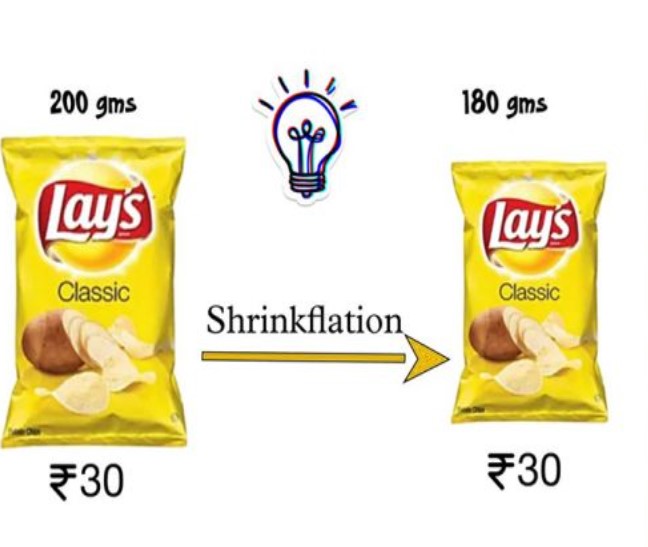
Am I being cheated? Impact of Shrinkflation

Shrinkflation: The Stealthy Inflation that is Affecting the Indian Market

In recent times, many consumers in India have noticed that the prices of their favorite products are not what they used to be. The quantity of the product is decreasing, but the price remains the same. This phenomenon is known as shrinkflation, and it’s becoming increasingly prevalent in the Indian market.

Shrinkflation is a form of inflation where the price of a product remains unchanged, but the size of the product decreases. This is a common strategy employed by companies to offset the rising costs of raw materials and production while maintaining the same price point for consumers.

For example, a popular biscuit brand in India, such as Parle-G, recently reduced the size of its pack from 400 gm to 380 gm, but the price remained the same. Another well-known chocolate brand, Cadbury Dairy Milk, also reduced the size of its bars from 50 gm to 45 gm, but again, the price remained unchanged. This has caused frustration among consumers who feel that they are paying the same amount for a smaller product.

While shrinkflation might seem like a harmless solution for companies, it can have long-term consequences for consumer trust and brand loyalty. Consumers are becoming aware of this practice, and many are feeling misled and cheated.

So, what can companies do to address this issue?

  1. Be transparent about the changes: Companies should be upfront and transparent about the changes they are making to their products. This can help to build trust and reduce consumer frustration. For example, Nestle India recently announced that it was reducing the size of its Maggi noodles packs, but also made it clear that the price would remain unchanged.
  2. Offer alternative options: If a company is unable to maintain the size of its product, it should consider offering alternative options, such as larger packs at a higher price point. This can help to ensure that consumers are aware of the changes and have the choice to pay more for a larger product.
  3. Invest in innovation: Companies should look for ways to reduce production costs and improve the efficiency of their operations. This can help to maintain the size of their products and keep prices down. For instance, Amul has invested in technology and automation to improve the efficiency of its production processes, which has allowed it to maintain the size of its products while keeping prices affordable.
  4. Focus on customer satisfaction: Companies should focus on delivering the best possible customer experience, regardless of the size of their product. This can help to build trust and maintain customer loyalty. For example, ITC’s Bingo! brand has focused on maintaining high quality standards, which has helped to build customer trust and loyalty, despite any changes to the size of its products.

In conclusion, shrinkflation is becoming a major issue in the Indian market, and companies need to be mindful of its impact on consumer trust and loyalty. By being transparent, offering alternative options, investing in innovation, and focusing on customer satisfaction, companies can ensure that they are providing the best possible experience for their customers.

Marketing lessons from the movie 300 Spartans – Old Warfare – New Lessons?

The 2006 movie 300 Spartans, based on the Battle of Thermopylae, is a classic tale of bravery, strategy, and sacrifice. This iconic film can also serve as a source of inspiration and guidance for modern marketers looking to create successful strategies. Here are some of the key lessons from 300 Spartans that can be applied to marketing:

Know Your Target Audience: In the movie, King Leonidas and the 300 Spartans knew their audience was the massive Persian army. They understood their strengths and weaknesses and used that knowledge to their advantage. In marketing, it is essential to understand your target audience, their needs, and what motivates them to make a purchase.

Have a Strong Unique Selling Proposition (USP): King Leonidas and the Spartans had a unique USP – their bravery, skill, and commitment to freedom. They used this USP to their advantage in battle, and in marketing, having a strong USP can set your brand apart from competitors and make a lasting impression on consumers.

Plan and Execute: King Leonidas and the Spartans had a well-thought-out plan for the battle. They executed their plan with precision, and as a result, they were able to hold off the Persian army for several days. In marketing, having a solid plan and executing it effectively is key to success.

Adapt to Change: In the movie, the Persians changed their tactics during the battle, but King Leonidas and the Spartans were able to adapt quickly. In marketing, it is essential to be flexible and able to adapt to changing consumer behavior, market trends, and new technologies.

Have a Clear Message: King Leonidas had a clear message for the Persians – “Come and get them.” This message was simple, clear, and effective. In marketing, having a clear and concise message that resonates with your target audience is essential.

Trust your team: The Persian King had a problem with “Shooting the messenger”, whenever someone tried to tell him about faults in his strategy, he would kill the man. Instead of acting on the gaps. In marketing, we need to be open to the customer and team feedback. Have your ears to the ground and act on the feedback. 

In conclusion, the 300 Spartans movie is a classic tale of bravery and strategy that can serve as a source of inspiration for modern marketers. By understanding their target audience, having a strong USP, planning and executing effectively, adapting to change, and having a clear message, marketers can create successful strategies that will drive growth and success.

“BLUF” Game of Effective Communication – The Minto Pyramid

The Minto Pyramid is a tool that helps individuals and organizations prioritize their goals and break them down into smaller, achievable steps. It consists of three levels: foundation habits, objectives, and the end goal.

Foundation habits are the first level of the Minto Pyramid and represent the habits and routines that support the end goal. In the business world, foundation habits could include time management, effective communication, teamwork, and continuous learning. For example, a sales team might establish a habit of daily check-ins to stay on track with their goals and receive support from one another.

The second level is objectives. This is where specific, measurable goals are set to help achieve the end goal. In the business world, objectives might include increasing sales by a certain percentage, launching a new product, or entering a new market. For example, a marketing team might set an objective to increase website traffic by 20% in the next quarter to support the company’s overall goal of increasing revenue.

The final level is the end goal, which represents the ultimate objective that the foundation habits and objectives are working towards. In the business world, the end goal might be to increase revenue, expand into new markets, or achieve a certain level of growth. For example, a company’s end goal might be to become a market leader in their industry by offering innovative products and providing exceptional customer service.

In conclusion, the Minto Pyramid is a valuable tool for businesses looking to simplify and prioritize their goals. By breaking down a complex end goal into smaller, achievable steps, companies can make progress toward their ultimate objective, one step at a time. Whether you’re a small business owner or a manager in a large corporation, the Minto Pyramid can help you prioritize your goals, focus your efforts, and ultimately achieve success.

Emotional Intelligence (EI) – is it over Hyped or Really an important part for Success?

Everyone talks about IQ (Intelligence Quotient)  and its importance for success. No doubt that IQ plays an important role in overall success. But the question is success sustainable without EI (Emotional Intelligence can be called EQ = Emotional Quotient too)? You can be a successful leader without much emotional intelligence if you’re extremely lucky and you’ve got everything else going for you: booming markets, bumbling competitors, and clueless higher-ups. If you’re incredibly smart, you can cover for an absence of emotional intelligence until things get tough for the business. Leading by Feel But at that point, you won’t have built up the social capital needed to pull the best out of people under tremendous pressure. The art of sustained leadership is getting others to produce superior work, and a high IQ alone is insufficient for that task.

The good news is that emotional intelligence can be learned and improved at any age. In fact, data shows that, on average, people’s emotional intelligence tends to increase as they age.

For example, one of the most common complaints we hear about leaders, particularly newly promoted ones, is that they lack empathy. The problem is that they were promoted because they were outstanding individual performers—and being a solo achiever doesn’t teach you the skills necessary to understand other people’s concerns.

Leaders who are motivated to improve their emotional intelligence can do so if they’re given the right information, guidance, and support..

The information they need is a candid assessment of their strengths and limitations from people who know them well and whose opinions they trust.

The guidance they need is a specific developmental plan that uses naturally occurring workplace encounters as the laboratory for learning.

The support they need is someone to talk to as they practice how to handle different situations, what to do when they’ve blown it, and how to learn from those setbacks. 

If leaders cultivate these resources and practice continually, they can develop specific emotional intelligence skills— skills that will last for years.

Vikas Marwaha – Business Strategist

What is common between Orange Juice & Palmolive Oil ..

At times organizations face this challenge of growth and most of the time they opt for the most obvious route of network expansion, discounts or offers Few take the path that is least travelled but most rewarding. I remember we faced the same challenge in 2009 when we were launching a product called MDF (Medium Density Fibre Boards) in India. The route we took to promote MDF was unconventional and the results are for all to see. Sharing two similar stories that have been etched in my heart and mind and have helped me in “Out of box thinking”

Sunkist

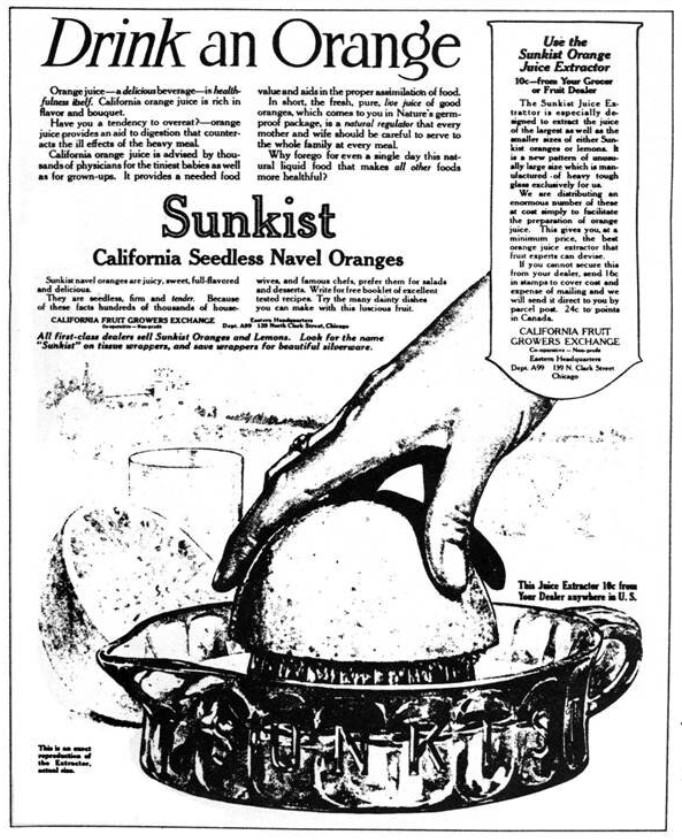
The cooperative of orange growers of California were struggling, their major source of livelihood ( Early 1900’s) i.e Oranges were not selling and they had only two options one was to cut the trees as they could not afford the expenses required to maintain them or increase the sales and consumption so that they can survive. They chose the second option. They hired one of the best marketers named Albert Lasker to work out a strategy for them to increase sales.

The issue was that the market for oranges was oversupplied and orange farmers were selling at a loss. First, Lasker changed their name to Sunkist. Then he developed a famous print ad that simply said, “Drink an orange.”

“Drink an orange.” (Shiral Tobin)

The thinking was brilliant. The ads persuaded people to squeeze oranges and drink juice at breakfast as a healthy way to start their day. Before the campaign, the average consumption per serving was half an orange. But after Lasker’s juice campaign, it jumped to two and a half oranges per serving. A 400 percent increase. Because of Albert Lasker, orange juice became a staple of North American breakfasts.

Palmolive

When a small firm from Milwaukee called the B.J. Johnson Soap Company approached Lasker with a laundry product, a category that was too crowded and had cutthroat competition. He asked them “Do you have anything else?”. The soap company said yes, they had a bar of soap made from palm and olive oils. It was called Palmolive, but they didn’t have much hope for it. Lasker felt differently.

First, he created a campaign around the “beauty appeal” of Palmolive, rather than its cleaning qualities. He completely changed the battlefield and expanded the pond size.

Then he sent letters to 50,000 druggists telling them Palmolive was about to launch a massive coupon promotion and to get ready for a stampede of shoppers. The soap company immediately received one thousand orders from retailers.

One year later, the B.J. Johnson Soap Company was redeeming two thousand coupons per month. 99 percent of drug stores were stocking Palmolive Soap. By 1916, Palmolive was the best-selling soap in the world. The B.J. Johnson Soap Company changed its name to the Palmolive Company.

And the rest is history.

Vikas Marwaha – Business Strategist

Top Reasons Why Employees Burnout

England’s top players are expected to have their time in the IPL limited to best prepare for the Test series, according to a report in The Times”. 

– The Times

This decision was taken ahead of Ashes ( series with Australia), the players were restricted to participate in the first two weeks of IPL. The reason given was that England wanted to improve their chances of winning the Ashes. The issue became controversial because last summer when some players participated in IPL, some of them had to be rested before a major series as they were not in peak form because of “fatigue & burnout” from IPL. 

Image Courtesy- Google

Burnout – this is a very common word in the corporate sector, the question is what causes this burnout? Why do employees fail to be in top form during or after burnout? What are the impacts on the company and employees? 

According to a study conducted by “Gallup”, the major reasons for ‘Burnout” are :

Unmanageable workload – a very common word in sports psychology, coaches use is “mental quicksand”, this is used to describe how poor performance can cause players to feel overwhelmed. This causes a cascading effect on the performance and leads to further strings of poor performances. High-performing employees can quickly shift from optimistic to hopeless as they drown in an unmanageable workload. In such situations employees look forward to support from their managers and want help for finding others to help them. 

 Unfair treatment at work – When employees start feeling that they are getting unfair treatment at work, their performance is impacted. Unfair treatment can include everything from bias, favoritism, and mistreatment by a coworker to unfair compensation or corporate policies. The absence of trust leads to Burnout. 

Gallup Study

Role Clarity – I was reading an article in Economic Times about the India Cricket team, the extracts The Indian cricket team seems to be suffering from a lack of role clarity, which appears to be hampering their performance. Quite clearly, when the coach and captain are at loggerheads when the two seniormost players in the team are contenders for captaincy when the place of the captain himself is under threat, and when the board is rife with internal politics, role clarity is bound to be a casualty”. When employees lack role clarity demotivation is bound to seep in. 

Disempowerment – A lack of control over your work can be incredibly frustrating. Whether due to micromanagement or a simple lack of trust, if you’re not given the freedom or resources you need to get the job done, burnout is likely to occur before long.

Lack of Communication – I have personally seen managers (armchair managers) just bark orders. They are also good at taking credit for the work of the team and very poor at giving credit for their work. Teams under such managers have a greater tendency to burn out.

The list is long but the core issue is that whenever you find yourself in this situation either highlight the issues and speak out or if things still don’t work out then work on your skills and move out of such a toxic place.
- Vikas Marwaha
Vikas Marwaha - Business Strategist
Vikas Marwaha – Business Strategist

“Kano Model” Killer tool to Achieve Customer Delight

Kano Model

The most common belief is that Customers don’t really know what they want; they need to be told.

Wrong!

The fact is customers these days have a fair idea of what they want, but they may not be experts at describing their needs. By understanding the types of customer needs and how to reveal them, you’ll better know your customer’s true needs and how to address them. 

The Kano model (Named after Noriaki Kano, Professor of the University of Tokyo and creator is useful in gaining a thorough understanding of a customer’s needs. In simple words, Kano Model helps in understanding and generating ideas and techniques that help us determine our customers’ (and prospects’) satisfaction with product features. 

The best part about Kano Model is that it can be applied to any product category and I will try to simplify this based for you based on working in various industries.

Kano Model can be used to pull together a list of potential new features that the team wants to develop. These can be then assessed according to two criteria:

  1. Their potential to satisfy customers.
  2. The investment is needed to implement them.

You can also think of the Kano Model as the “Customer Delight vs. Implementation Investment” approach.

The features under Kano Model can be divided into 5 categories and two sub-categories i.e “Features to include” and “Features to Avoid”

Understanding these 5 different categories helps in a big way on “What to Include and What to avoid”. This saves lots of time and cost for the organization.

The two Features that need to be avoided are – Indifferent and Dissatisfaction features; for example What difference will it make to a customer whether company A uses XYZ inventory management system, as long as his work is not being impacted. Similarly for dissatisfaction features for example  – The fewer options and variety on the menu of an airline, the lower the satisfaction of its customers.

Under the Kano Model, the three categories of initiatives that need to be studied in depth are – Basic, Excitement, and Performance. These help in creating the biggest differentiators for the brand. 

Basic Features – These types of features are usually called Must-be or Basic Expectations. These features are like having them will not make the customer more happy or satisfied but not having them will certainly make them unhappy. We expect our phones to be able to make calls. Our hotel room should have running water and a bed. The car should have brakes. 

Excitement Features – I remember meeting a dealer in Punjab, who had a very loyal customer base (Carpenters). The simplest reason was that he had created a huge lunchroom for them and even if they buy any material or not they had the luxury of having free lunch in the canteen. He also used to run lots of loyalty programs for his customers. There are unexpected features that, when presented, cause a positive reaction. These are usually called Attractive, Exciters, or Delighters. I remember that the first time people used iPhone, the reaction was a big “WOW”. Remember the first time you learned XLS tables and the ease of calculation of complex maths totals. The more you have these features – the greater the satisfaction level. 

Performance Features – These are features that give you a proportionate increase in customer satisfaction as you invest in them. One example would be increasing file storage capacity in an online app. The best part is these features are “One-Directional” i.e the more you have them the better the customer’s delight. These also feature customers who know they want and weigh heavily when deciding whether to choose your product or your competitor’s

Hope this simplified version will help you, friends, when you go for something new, be it a product launch or a retail store launch

Vikas Marwaha - Business Strategist
Vikas Marwaha – Business Strategist

5 Life-Hacks & Lessons from Moneyball

Sports have always been close to my heart, not only because they help you remain mentally and physically fit but also the valuable lessons you learn from them.

One of my all-time favorite sports movies is “Moneyball”.

The best part is it’s full of lessons that I have been practically using in my day-to-day life as a Sales & Marketing Professional. 

Some of the top lessons/learnings that have helped me are:

When the deal is over “Get Lost” – I have modified the famous dialogue from Moneyball – “When you get the answer you’re looking for, hang up.”~ Billy Beane. Most of the time I have felt that we overstay in a sales call or a meeting (Even in a toxic relationship). The important part is when we close a deal, the longer we take to close the meeting, the more we might have to give to the other party. Learn to walk away when the deal is over.

Image – Googles

 Focus on the Process and right Parameters of measurement – All other teams were focusing on batting averages whereas Billy Beane and Paul DePodesta focused on the most crucial metrics and that was “on-base and slugging percentage” Focusing on the right parameter helped them get great players at the “Lowest Price”, whereas other teams struggled. I have personally witnessed in many situations that the differentiator is small things and the way you analyze data. Most of the salespeople focus on “Sales” but forget that “Sales is a by-product” of what we do. It’s the process that is more critical. Try inverting and you will feel the difference. If you play like them, you can never beat them – Another famous line by Billy Beane in the movie that has inspired me to think differently – “If we try to play like the Yankees in here, we will lose to the Yankees out there.” Most of the time we fall into the trap of what competition is doing and try to replicate or better their strategy. A better strategy is to change the battlefield and find your niche. Though it’s easier said than done but if you meet your customers and listen to them ( LISTEN – Keyword) then you will surely find that Niche. 

Image – Googles

Challenge the Status-Quo – Old-time Pandits and Gurus of the Baseball were following a traditional approach in team selection and by bringing in science in this age-old methodology Billy Beane challenged the Status-quo and produced a “Game Changer”. In statistical parlance, “test and control” is the process where a small sample is isolated to perform a test, and then compared to the ones where no change occurred. If sample results exceeded the status quo, that was evidence that the test could be rolled out successfully. Build a culture of “test and learn” in your sales organization.

Focus on Joint Team Outcome to create Domino effect – Like any team sports, the results in Base-Ball too are a subtotal of the team’s effort.  In a sales organization, the results of the sales team are not because of their solo efforts but highly dependent on the support functions too. Focus on strengthening the synchronized effort and creating an orchestra effect. I have seen many times managers focusing on just the numbers and letting go of the other key issues like customer service, accounting transparency, and key business functions, they fail to create a domino effect

Vikas Marwaha - Business Strategist
Vikas Marwaha – Business Strategist

Customers Satisfaction – is it a Myth or a Reality?

Conventional wisdom says that the basic aim for an organization to create a loyal base of customers is to ensure that the customers are not just satisfied by their service but they are delighted by their service. Some of the concepts divide customer satisfaction into four different levels like – Meet, Exceed, Delight and Amaze. The majority of people feel that this is a linear journey.

On one extreme we have examples of companies that are trolled daily on social media for bad service and dissatisfied customers, while on the other extreme there are examples of stories from companies like Nordstrom tire – In 1975, a man drove up to a Nordstrom store asking for a refund for tires he’d bought weeks ago at a tire shop that the retailer replaced. Even though the company had no obligation to pay the man, they still did, much to his delight. Today, this story is an often-repeated customer-service legend.

Nordstrom Tire

The question that keeps on popping up is that is there a process for customer satisfaction or is it just a hit and trial method to achieve the top level.

According to Don Clifton & Gallup’s study, customer satisfaction is a scientific process and varies from industry to industry eg customers demand a different type of relationship from their doctors than they do from their electric repairman. Despite these differences, the process can be divided into “Four Levels” and these levels are quite consistent across various types of businesses and types of people.

Level 1 is “accuracy” – The customers expect the hotels to give them the room they reserved. They expect the same shade that they see in the shade card when they buy the final product. When they eat out, they expect the waiter to serve what they ordered. It does not matter how friendly the employees are; if the company consistently fails the “accuracy” test, the customers defect.

Level 2 is “Availability” – Customers expect their preferred hotel chain to offer locations in a variety of different cities. They expect the shade of laminates or paint they saw on the net to be available at the dealer shop without much effort.

Though both the above-mentioned levels are very easy to steal. Anyone can copy them without much effort. Moreover, even if the company manages to be “accurate” and make their product “available”, they become hygiene factors and only the absence of these will create dissatisfaction but presence might not create satisfaction.

The next two levels help in completing the journey. They don’t just create a wall against negative feelings of dissatisfaction, rather when met consistently these expectations create positive feelings of satisfaction. They help in creating “Brand Advocates”.

Level 3 is “Partnership” – The customers want you to listen to them, to be responsive to them, and to make them feel like they are part of the same team. That is the reason airlines create “Loyalty Programs” offering special treatment to frequent fliers. Some of the businesses have gone a step further and started looking at the world through customers’ eyes. E.g. Levi’s now offers you the chance to purchase made-to-order jeans. Companies like Greenlam have introduced “Customized Laminates” as a step to strengthen the partnership with customers. Most businesses now realize that a customer who feels understood is a step closer to real satisfaction & genuine advocacy.

Level 4 is “Advice” – This is the most advanced level of customer satisfaction and final level as they no longer are satisfied customers but are your advocates. The best example is colleges and schools and why they have so strong alumni associations. One recent example is of the product called Medium Density Fiber Board (MDF), market education alone created a huge differentiator for my last company and we were able to create a huge customer base that also went on to become our advocates for the product in the long run.

Partnership and Advice are the most advanced levels of customer satisfaction. If you can consistently meet these expectations you can successfully transform prospects into advocates. To meet these expectations, the front line team should be not “Transactional sales team” but “sales Consultants”.

Vikas Marwaha – Business Strategist

Copy Cats – Don’t worry if people copy your strategy, they copy what they see.

Imagine Rahul Dravid playing like Virender Sehwag in test cricket or one-day internationals. For most of his career, Rahul has been perceived as a batsman who could not play and score fast especially in One-day limited-overs cricket. He tried to change his style initially but failed, he was given the option of wicket keeping as that was the only slot vacant in the team – wicket-keeper – batsman slot. He is one of the few batsmen who have scored 10,000 plus runs in both Test and limited-overs (ODI) cricket. Had he tried to copy some flashy cricketers he might not have been so successful. He stuck to his style and proved everyone wrong.

Rahul Dravid

When a Las Vegas casino had a great degree of success luring Japanese gamblers to its baccarat room, competitors tried to copy what they thought was the reason for the success: They spent millions of dollars building larger and more elaborate baccarat rooms and offered more services to lure these Japanese gamblers. For a short while, the Japanese gamblers visited the rival casinos, but they always came back to the original casino. The competitors became even more frustrated and continued to invest millions more, without any success. The reason that particular casino was successful is that the manager took the time to learn the language and culture of these Japanese gamblers. He was in the best position to understand how they thought and what they wanted. The rival casino businesses could not duplicate this because they had only copied what they could see. This should have served as a warning signal that the rival casinos did not have a sound plan of their own focusing on what they did best.

Casino

I remember a few years back when we were launching a product known as Medium Density Fiberboards (MDF) in the Indian market, we came out with some innovative and new-trade methods to generate demand. The demand for MDF was very low in India and most of the users were adverse to use the product. The dealers did not stock or sell the product and to make matters worse our capacity was 50% of the industry size. All other companies were in ‘RED” for almost a decade. Fast forward to 5 years post-launch, we were commissioning our second plant, and the rest of the industry was copying our strategies. They could copy what they saw but could never copy the underlining passion and the “Why” part of our strategy and approach. As a result, most of them could not penetrate the segments we could. Fast forward another 5 years, MDF is a household name and the entire industry has benefitted. Though no longer associated with the product but what we could achieve is what the entire market acknowledges. Had we decided to copy some of the known names and existing players we might not have done what seemed to be impossible at that time.

“Feel happy when people copy you or your strategy because they are the people who help you do better in life and challenge your limits”.

Vikas Marwaha – Business Strategist

Butterfly Effect / Ripple Effect – How to Create Waves in Business & Career.

Recently I was reading an interesting book on “Mental Models”, I came across an interesting concept called “Butterfly Effect”. The more I read about this, the more I could relate some of the recent developments and business strategies to this concept. We can also call this concept the “Ripple Effect”.

More recently scientific researchers have discovered that “if a butterfly flaps its wings (small cause) in China it can contribute to the cause of a tornado (big effect) in Kansas (for example – Impact of Covid on the world)”. The butterfly effect explains how small changes in initial conditions produce enormous effects, though often distant in time and place.   The new understanding is that small causes trigger a chain of events. 

Mental Models

An interesting incident happened during the World Cup (Cricket) in 2019. Pakistan was almost on the verge of victory and just needed 44 runs to win off 35 balls. They were cruising but then bad luck struck. The Australian captain took the review on the last remaining second and it turned out to be a legit dismissal. Pakistan lost. Even then, Pakistan equalled their wins with New Zealand but didn’t qualify for semis due to a lesser Net Run Rate.

Then followed the interesting part (Butterfly / Ripple Effect)

This resulted in Coach Mickey Arthur getting sacked and replaced by Misbah ul Haq. He (Misbah) inducted A. Shahzad & U. Akmal out of nowhere in a T20 series against Sri Lanka and screwed the combination of the then no.1 T20 team. Misbah sacked T20 captain Sarfaraz on the series loss and later inducted Usman Qadir (who had no plans to represent Pakistan), Mohd. Irfan (who didn’t play an international game in 4 years) on the Australia tour and appointed a proven failed captain Azhar Ali as a test captain. Pakistan team now stands at 7th in Test, 4th in T201 & 6th in ODI rankings which will go down further after a defeat against Zimbabwe.

Pakistan World Cup 2019 ( Image courtesy Googles)

I remember in mid-Nineties tyre companies were trying their level best to convert Car tyres from Bias tyres (Old Technology) to Radials tyres (New and the latest technology ). I was based in a small town of Haryana (Northern India) and it was really challenging to sell even a small quantity of Car Radials. The major reason was that customers were not prepared to give up their comfort zones of tried and tested bias tyres. The major opinion-makers were car mechanics and they had no clue on what a car radial was. Since mechanics were equivalent to Google’s back then and they being the major source of knowledge were “Anti Radials” as they did not want to admit to the customers’ that they had no knowledge on the subject. We identified this issue and started a campaign for market educations (Mechanics & customers education). The result was that within a few months we had major mechanics as our key spokespersons and advocating Radials and its advantages to the customers. We could create the Butterfly Effect and the rest is history.

Recently I was travelling to Chennai and there met one of the major dealers of Plywood. The dealers had another business of manufacturing steel utensils and were the top brand in Andhra. Many competitors tried to capture their market but were not able to as their brand pull was massive. Suddenly they realized that visibility of another brand was increasing, particularly in Vijayawada, which was their forte. They analyzed the reason and found that the strategy adopted by their competitor was to capture smaller markets near Vijayawada first and then create a “Ripple Effect” of demand for bigger towns i.e Vijayawada. This is what Chanakya did to win the war against Dhananand. Capture far off areas first and then attack the major epicentre.

Some key steps involved in creating a positive “Ripple Effect”

Begin with the End in Mind

Align your team to the goals – most of the times people don’t understand the objective and they do it just for the sake of doing it. Sharing the objective helps.

Find your Niche

Identify the major influencers in the process or in other words they can be bottlenecks too – in the above examples Mechanics (Bottleneck as well as opinion makers) and small-town dealers who were major customers of big town wholesalers.

Be consistent with your efforts – the major scaling up will happen after consistent efforts.

Ripple Effect and Butterfly Effect help us to understand the value of small steps in Business and Career. Small or baby steps are the basis for bigger steps. Identify the bottlenecks and work on basics to create the impact.

Vikas Marwaha – Business Strategist

What is similar between Napoleon and Jon Spoelstra?

In the year 1795 Napoleon wanted to solve the issue of food during long battles, he offered a reward for research on food preservation. Finally “Appert” who was also known as “Jack of all trades” came out with a unique solution, he placed food inside of thick champagne bottles. He sealed them to make them airtight and then placed them in boiling water for hours. This innovation helped Napoleon crack the problem of carrying food for the army.

Thirteen-year-old “Jon Spoelstra” used to deliver 50 papers every day. It took him about an hour daily. He analyzed that at least half of the houses he passed did not subscribe to newspapers.

In a few months’ time, he figured out that if he could add more houses his time spent will not increase much but his income would. He started thinking how can I get them to subscribe? He did some research and made a list of people who didn’t subscribe, the people whose house he rode by each day. He mailed a hand-written letter to each family: “I’m the paperboy for the Detroit News. You may have seen me. I ride my bike past your house at the same time every day, rain or shine. I could easily deliver a paper to you, just like I do to your neighbors. There’s a lot of interesting articles in the paper, and I think you’ll really enjoy the Detroit News. If you’d like to try it, just hang the enclosed card on your doorknob, and I’ll deliver the News for a week at my expense. If you like it, I’ll just keep on delivering it. I collect once a month”.

Within three months, he was delivering 100 newspapers in about the same time as it had taken him to deliver 50. He had effectively doubled his pay. A few months later, he tried the same letter on an adjoining neighborhood. Soon he had 150 subscribers, and it didn’t take much more time. For a little extra effort, he was making three times as much.

Jon says “Now, when I see America Online, Gillette, and other companies giving away free merchandise to gain customers, I think: I did that! I thought it up on my own. It seemed pretty outrageous at the time – whoever heard of giving it away”

You would be wondering why and how these examples will help you and why I am sharing them. Generally, during a downturn in the economy (like covid) majority of people enter a shell. The first tendency is to hold payments of the suppliers and vendors rather than thinking like Jon Spoelstra or Appert and seizing the opportunity and come out with a sustainable solution.

Think over it,

·       Slowing down payments of suppliers or creating synergy and building a business that can help you face any crisis?

·       Spoiling relations with suppliers or create goodwill that will help you get their unconditional support?

·       Pushing your suppliers to scout new distributors and create more competition for you or using their strengths to help you expand business (your business)?

On the flip side, it would not be wrong to say that your competitors would be in a shell (during the downturn), and why not go all out and seize the opportunity.

Vikas Marwaha – Business Strategist

How Anchoring Bias influences our decisions?

If you are watching a Tennis match (assume betting is legal for a moment) and two great players are playing (say, John & Roger). You are aware that the probability for each to win is 50%. Suddenly you see that the bookies have given odds for winning as – John 2.5 and Roger 1.68.

Since we have the luxury of knowing that each player’s true chance of winning is 50%, it is clear that the 2.5 offered on John is a massive value bet, while the 1.68 offered on Roger is a disaster, still, even the most experienced people bet for Roger. As the bookies make us falsely believe that John has significantly lower chances of winning the match than Roger. The Bookies smartly use a bias called “anchoring bias” to fool our minds.

We can see Anchoring Bias working in our day-to-day life and some brands smartly use this to change buyer’s behavior.

Some common examples of Anchoring Bias

  • “On Sale, 4 hand towels for Rs.100” vs. “On Sale, Rs.25/roll” In this particular experiment, the multiple unit pricing performed 40% better than the single unit pricing, even though the sale value is exactly the same. The brain uses the number four as the anchor.
  • Very common method used by restaurants is to increase the “mark-up” (Pricing) of second most expensive wine bottle. Guess what, again our “Anchoring Bias” plays on our mind – we tend to order the second least-expensive bottle of wine in an attempt to avoid looking cheap.
  • Generally absurd expensive premium goods are less of publicity stunts and more of strategic marketing tactics. In 2010 Serendipity 3’s restaurant used “menu anchors” in a great way. They introduced a $69 hot dog called “Foot-Long Haute Dog”. Of course, Serendipity 3 gained plenty of publicity when The Guinness Book of World Records certified this hot dog as the most expensive of all time.
  • The true purpose of these ridiculously priced premium items is to make the next most expensive item seem cheaper. Customers who were drawn by the Haute Dog’s publicity gladly ordered the menu’s $17.95 cheeseburger. Even if $17.95 was too pricey elsewhere, Serendipity 3 customers deemed it reasonable in comparison to the $69 hot dog. ( Case study courtesy – right attitude)

You too can use this technique for pricing and other initiatives to boost business:- )

Vikas Marwaha – Business Strategist

How Companies & Individuals become Anti-Fragile?

We have heard lots of stories about Chandragupta Maurya, he has been instrumental in shaping the history of ancient India. There are stories of his strategies on playing mind games with the Greeks & his role in the fight against Alexander, but few are aware that he was immune to Poison!

The story goes like this, Chanakya knew that he had to defend and protect Chandragupta Maurya from being killed. He (Chanakya) also anticipated that the enemy could be someone within their camp and inner circle & which means he will use “Faith & Loyalty” to stab in the back i.e. use Poison. He decided to give a very small portion of poison to Chandragupta since his childhood. This made him immune to poison and when Dhanand tried to poison him, he did not die.

You would be wondering why I am sharing lessons of history with you. To answer your question, let me share a concept called “Antifragility” designed by famous author “Taleb Nassim”.

As per Taleb Antifragility can be defined as “Some things benefit from shocks; they thrive and grow when exposed to volatility, randomness, disorder, and stressors and love adventure, risk, and uncertainty. Yet, despite the ubiquity of the phenomenon, there is no word for the exact opposite of fragile. Let us call it anti-fragile. Anti-fragility is beyond resilience or robustness. The resilient resists shocks and stays the same; the anti-fragile gets better.”

Some people get better when exposed to difficulties and similarly, some companies get better when exposed to tough times. Companies working on new skills and learning from them will always grow compared to those who play safe.

Some examples of such Anti-Fragile companies:

  • Penguin Magic – Generally magic shops do not make money and this is one business in which people generally go bankrupt very soon. One company Penguin Magic” changed this, the sort of company that they invented the internet for. https://www.penguinmagic.com/ . To date, their videos, on the site and on YouTube, have been seen more than a billion times. A billion views with no cost of distribution. They have developed thousands of videos for simple magic tricks, they keep on researching new tricks and every time their competitors copy them, they come up with new tricks.

Toyota- Over the course of 2009/2010 the company was hit by the largest car recall in history and then by a massive tsunami that caused havoc in its supply lines. Toyota has a culture that is based on accepting that crises and disruptions are intrinsic to the world. Rather than be controlled through rigid command structures, employees at all levels are trained daily to be quick problem solvers. In fact, Toyota has almost completely reinvented itself in recent years, committing $1 billion to five-year robotics and AI project based in Silicon Valley. They designed prototypes of home care and hospital robots for some time and have just started selling its Kirobo Mini robot — a $400, 10 cm tall baby companion in a country (Japan) with plummeting birth rates.

Disruptions and Black Swan events tend to make us stronger, we can learn from them and emerge as Anti-Fragile.

Vikas Marwaha –
Business Strategist

5 Qualities of “Heliotropic Leaders”

Cricket is like religion in Indian Sub-Continent, Changing nature of the game has sprung some unexpected surprises on cricket lovers. Pink Ball in its short history has produced some interesting moments. India out on 36 & England 58. Some test matches are getting over in just 2 days. Srilanka, beating a strong Pakistan after getting out on 96. Many such upsets were witnessed by just a small change in fundamentals of the game.

Changing Match Equations (Picture courtesy Google)

The same thing happens when market conditions and fundamentals of the businesses change. Some of the leaders who perform well in the “Bull Run” struggle when there is a downtrend in the market. Their “charisma” vanashies on the first sign of trouble. But some exceptional leaders are like “Heliotropic Plants” they know how to keep growing and helping others to grow even in tough times.

Heliotropic Leaders

The 5 qualities that every strong Heliotropic leader should have are:

  1. They focus on the culture of Mutual Trust: This is a basic of leadership excellence and for a team to be successful, leaders must work on building Mutual trust. If your employees are going to feel safe and experiment with new things they need to be confident that their mistakes will be encouraged and they will be free to try new things.
  2. They Handle Pressure well: As a manager, you’re held accountable for the results of others. There will be times when your team underperforms and that’s the time when you will have to stand by them and handhold them. Virat Kohli has been trolled after losing to Australia. Dhoni was trolled after every loss but he always stood by his team and had faith in their skills.
  3. They communicate Honestly: Under pressure, most leaders start blaming others but the hallmark of a good leader is to communicate honestly and accept responsibility for things that have gone wrong. People will have trouble improving if leaders fail to identify the correct issues and start focusing on them.
  4. They are Open to New Ideas: Good leaders experiment and they allow others in their team to come up with new ideas and are receptive to them. One very famous quote of Science author & media theorist, Steven Johnson – “if you look at history, innovation doesn’t come just from giving people incentives; it comes from creating environments where their ideas can connect”.  Great leaders understand the power of ideas and use them to grow. 3M is a wonderful example and their culture of idea generation is a case study in itself. 
  5. They help develop employees’ careers: Some leaders believe that the training and development of their team will increase the attrition rate in their organization. They feel that if they teach people they will leave their organization and move. Good organizations and great leaders feel otherwise, they know that creating opportunities for employees to master new skills actually binds them to the organization. This helps them to build the team’s depth and strength. This also conveys a powerful message that you care about their personal growth and welfare.
Vikas Marwaha – Business Strategist

Top Marketing Lessons from Nike – Understand your core customer

Year 1992 was a historical year in Nike’s history, it laid the foundation to its journey towards excellence. Phil Knight was the architecture of these changes. He laid the foundation to some of the greatest principles of ‘High –Performance marketing”. To this day, Nike stays true to these principles.

Though these are 11 principles in total, but we will discuss top three in this part, rest in the next few parts. The 11 principles are:

  1. Understand your core customer
  2. Create a pyramid customer base
  3. Do your market research
  4. Define your identity and messaging
  5. Focus entirely on that and cut out bias
  6. Create sub-brands under the umbrella of your brand
  7. Creating emotional ties
  8. Take chances and learn from them
  9. This all works if you have a good product
  10. Work with influences because people already know and trust them
  11. Build long term relationships with influencers to build long-term relationships with consumer.
  1. Understand your core customer: In their initial year’s Nike was known as a running shoe company. Most of their employees were runners and this helped them understand their customers very well. Later on, when they diversified into other sports, they did the same. Nike would go to the top players of that sport and would do everything possible to understand what they needed from a tech and design standpoint & then the engineers would create a product that would give the athletes what they needed both functionally and aesthetically.
  2. Create a Pyramid customer Base: The first step was to create “Core Customers” ie the athletes.      Phil Knight believed in the principle “if we get the people at the top, we’ll get the others because they’ll know that the shoe can perform.”  The question is who made the pyramid customer base? The pyramid top was made by athletes, mid-portion was made up by weekend warriors ie the people who worked out on weekends. At the bottom were all those wore athletic shoes. The key to their success was not communicating with the pyramid top but designing the communication in such a way that they connected well with the customers at the bottom. This helped them understand the entire pyramid.
  3. Do your market research: Just like Nike did everything to understand their core customers, they did the same for the everyday Joe (common man). Knight says, “To understand the rest of the pyramid, we do a lot of work at the grass-roots level.” They would:
    •  Go to amateur sport events
    • Hit the gyms
    • Visit tennis courts
    • Attend local clubs, because they wanted their product to have the same functionality for “Michael Jordan or Joe (common) American Public.”

Lesson learned – stay connected to the roots, keep your ears to the ground, you can never fail.

Vikas Marwaha – Business Strategist

Cont….